Our Special Place

Crossgate
Crossgate Nursery is sited on the Cornish side of the river Tamar, where wide, painted skies meet the lush hillsides of the river valley.
Give or take a few years of bureaucratic wranglings, the Tamar has represented the border between Cornwall and Devon since King Æthelstan, the first king of England, fixed the border there more than a thousand years ago.
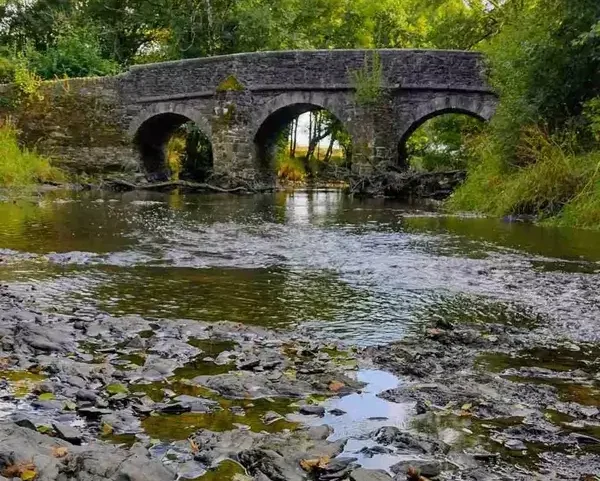
The bridge of our logo is a pictorial representation of the ancient stone bridge over the Tamar at Crossgate. Crossgate, now a small hamlet in the midst of grazing land, was once the site of the terminal of the Bude Canal, which in the 19th century brought fertilizer to the mineral-poor inland farmlands.
Just off the main road to Launceston it is, and always was, both a gateway from the ancient Cornish capital to the hinterlands of the northern coast, and a river crossing point where civilised England meets its slightly wayward Cornish kin
The bridge of our logo is a pictorial representation of the ancient stone bridge over the Tamar at Crossgate. Crossgate, now a small hamlet in the midst of grazing land, was once the site of the terminal of the Bude Canal, which in the 19th century brought fertilizer to the mineral-poor inland farmlands.
Just off the main road to Launceston it is, and always was, both a gateway from the ancient Cornish capital to the hinterlands of the northern coast, and a river crossing point where civilised England meets its slightly wayward Cornish kin

Cornwall
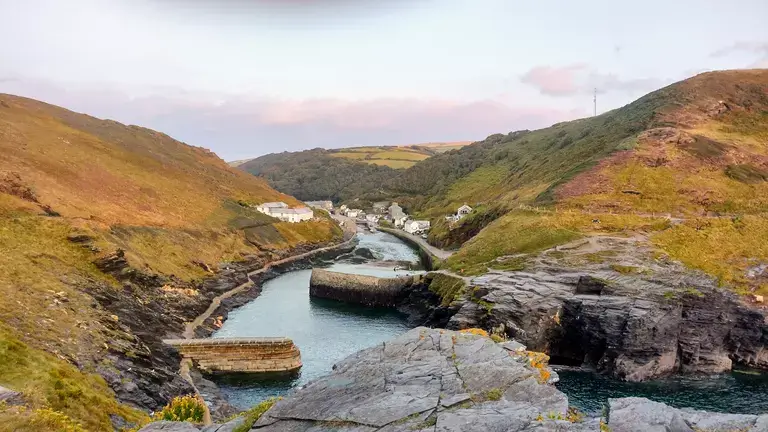
Cornwall is a much romanticised place. Its human history plays a role in that – Cornish folk have been depicted as fiercely independent people, derived from an ancient Celtic past that resisted absorption into Roman Britain and Anglo-Saxon England.
In the 20th century attempts to resurrect the tinminers old ‘stannary’ government became the basis of talk of cornish independence. And, when King Charles ascended to the throne in 2022, the proclamations read out in places like the cathedral city of Truro were made in English and Cornish, proof that the Cornish language is more than just a hobby thing of a few dozen Cornish expats.
Wherever one falls on the politics of it all, its hard to argue that Cornish people feel a sense of separation from much of mainland England that’s as much to do with cultures and tradition as it is geography.
That sense of distinctness is also a product of a landscape where so many coastal and inland villages are joined to the outside world by the narrowest of hedge-bound lanes. Where folk still know what it feels like to be cut off by snow and floods in winter, and where tourism brings abundance in summer but solitude – and often extreme hardship – in winter.
Cornwall
Cornwall is a much romanticised place. Its human history plays a role in that – Cornish folk have been depicted as fiercely independent people, derived from an ancient Celtic past that resisted absorption into Roman Britain and Anglo-Saxon England.
In the 20th century attempts to resurrect the tinminers old ‘stannary’ government became the basis of talk of cornish independence. And, when King Charles ascended to the throne in 2022, the proclamations read out in places like the cathedral city of Truro were made in English and Cornish, proof that the Cornish language is more than just a hobby thing of a few dozen Cornish expats.
Wherever one falls on the politics of it all, its hard to argue that Cornish people feel a sense of separation from much of mainland England that’s as much to do with cultures and tradition as it is geography.
That sense of distinctness is also a product of a landscape where so many coastal and inland villages are joined to the outside world by the narrowest of hedge-bound lanes. Where folk still know what it feels like to be cut off by snow and floods in winter, and where tourism brings abundance in summer but solitude – and often extreme hardship – in winter.
The landscape around us has a will of its own, which both invites and resists the taming energies of the gardener.
An Untamed Landscape
Most of the local farmers have given over the challenge of taming the lands to livestock and fodder grasses, that can flourish where crops can’t.
Arable farming here is tough – the soils are often poor, the topography challenging, and there are regular winter floods along the river floodplain that can make even the uplands boggy and heavy in winter.
Of course, the nature of the local soilscape isn’t as much of a consideration for predominantly container growers like us at the nursery as it is for local farmers.
But we are just as subject to the local climate. In some ways, the Cornish climate is more moderate and benign than much of the rest of the country, being rarely susceptible to the same summer heat or deep winter frosts as counties further north and east.
Our summers here are soft and easy, with the heat of mid-summer often becalmed by gentle Atlantic breezes and rain showers.
The landscape is varied and wild, and plants grow quickly here, nestled in the lees of the hills but swaddled by the summer light that spreads out like a blanket across Cornwall’s broad horizons.

But we are just as subject to the local climate. In some ways, the Cornish climate is more moderate and benign than much of the rest of the country, being rarely susceptible to the same summer heat or deep winter frosts as counties further north and east.
Our summers here are soft and easy, with the heat of mid-summer often becalmed by gentle Atlantic breezes and rain showers.
The landscape is varied and wild, and plants grow quickly here, nestled in the lees of the hills but swaddled by the summer light that spreads out like a blanket across Cornwall’s broad horizons.
You’re never far from the coast in this part of the world, and so there’s a mineral feel to the air and a calming sense of a world yet untamed by human hand.
Plants seem to feel it too, and race away with a vigor we’ve not experienced elsewhere in the UK once spring settles in.
And yet it’s that wild edge to the landscape and its climate that can also makes this a challenging place to grow.
There’s an austere, bleak beauty to the highlands of Bodmin and Dartmoor, to our immediate west and east, that makes one realise this is also a hard, demanding land in the cooler winter months.
Even in our lowland site, in autumn and winter the Tamar becomes a raging torrent, prone to frequent floods, as the dominance of ‘Atlantic’ weather turns our world into wind and wet and mud.
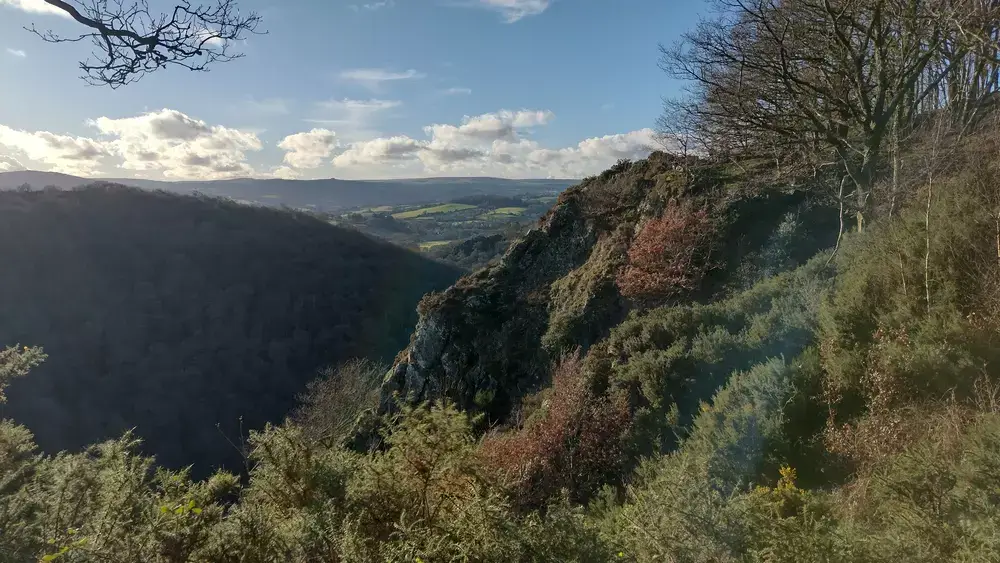
There’s an austere, bleak beauty to the highlands of Bodmin and Dartmoor, to our immediate west and east, that makes one realise this is also a hard, demanding land in the cooler winter months.
Even in our lowland site, in autumn and winter the Tamar becomes a raging torrent, prone to frequent floods, as the dominance of ‘Atlantic’ weather turns our world into wind and wet and mud.
You’re never far from the coast in this part of the world, and so there’s a mineral feel to the air and a calming sense of a world yet untamed by human hand.
Growing for Resilience